If life is what happens to our plans, then dance is what happens to our steps.
ideas sometimes when you wait they come to you.

Preparation for starting with BAPP

Showing posts with label Conference. Show all posts

Sunday, 20 October 2019

Thursday, 26 September 2019

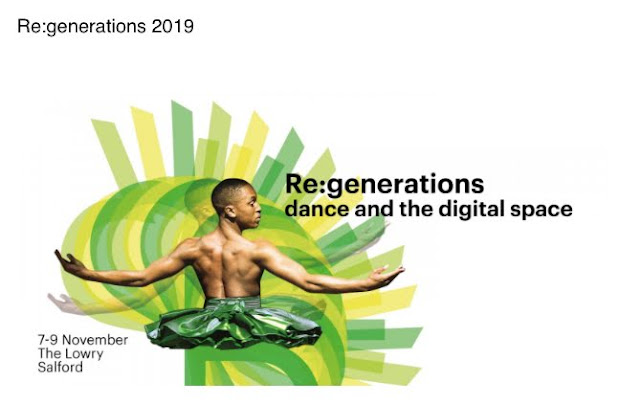
Attend Re:Generations Nov 7th to 9th

We are really excited to be able to offer a few funded places for MAPP/BAPP students to be able to attend the Re:generations conference hosted by One Dance UK in partnership with Mdx in November. The funding covers three days of entry to the conference plus your accommodation. The conference is held at The Lowry, Salford, in the UK. 

Re:generations is a biennial academic and artistic conference which aims to share current practice and research in the field of dance of the African Diaspora (DAD); explore and stimulate further research, documentation and new approaches to education and training in the field; and encourage new perspectives on the future of African Peoples Dance (APD). The conference invites scholars, artists and dance practitioners from the Caribbean, Africa, the United States, Canada and the UK to share their research with other artists, practitioners, dance teachers, students and the general public.
The Re:generations Conference* is the UK’s ONLY international platform dedicated to connecting academic and artistic voices within African influenced dance styles; such as Hip Hop, Jazz, Afro Caribbean, traditional and contemporary African and Caribbean, Afro-Latin, and African American Dance.
This will be a great opportunity to be a part of a vibrant conference, network with other artist-scholar practitioners, and get inspired in your own professional development. The funding requires you to blog each day about the sessions, papers, workshops and performances you attend to share with the rest of the MAPP BAPP community.
To express your interest please comment here. We will then email you directly. We will announce which students have places on October 10th 2019. 
*Re:generations – dance and the digital space
7-9 November 2019
The Lowry, Salford
An international forum exploring how technology drives innovation in dance of the African Diaspora.
Hosted in partnership by One Dance UK, IRIE! dance theatre, Middlesex University, Dance Immersion and The Lowry, the theme for Re:generations 2019 is dance and the digital space. We will explore the ways digital technologies can be used for artistic innovation and creative practise, unite global communities through online platforms whilst increasing the visibility of diverse work to mainstream audiences.
Across the three days there will be panel discussions, lecture demonstrations, masterclasses, workshops, academic paper presentations, performances, networking events and more!
The conference will provide CPD for dance teachers, healthcare practitioners and other dance professionals, in addition to bespoke programming for producers, new media practitioners and executive artistic leaders. A key event will be the launch of the report for One Dance UK’s ‘Dance of the African Diaspora Mapping Research’; presenting the current state and needs of the DAD workforce with a scope for future growth and development.

Sunday, 18 February 2018

CADD conference - first day

This weekend I have been at the Collegium for African Diaspora Dance (CADD) Conference https://www.cadd-online.org . This is the third Conference they are held every two years. This year is called Dance Black Joy: Global Affirmations and Defiance. Last year I presented a dance here. This year I have presented on research I am currently doing Movements, Narratives and Meanings and also on the book I wrote/edited that is just been published last week on-line and will be available in two week as a paperback.

The conference is always a reaffirming inspiring event. There are so many amazing people sharing amazing ideas here. It is held at Duke University in North Carolina.

The events I have attended have all been saying the same thing to me.
The importance of community, family, arts activism – what are you saying with that movement, with that way of teaching, being? and respect for those who teach us, those who have trailblazed the way we are taking – cleared space for us to be on the journey we are on.

Yesterday I started the day with a ballet class with Dr. Joselli Deans she was at Dance Theatre of Harlem when I was there. In class were also Theara Ward  (former soloist at DTH) and Dr. Kimberley Jorden. It was so nice to all be in class together again. As the conference is about Joy it was a joyful moment for me.  

At the start of the conference we Celebrated the legacy of Dr. Charles “Baba Chuck” Davis 

Baba Chuck had opened the first two Conferences and so we honoured his work and life to open this one. Have a look at the link. His work involved community dance. He is a part of our dance history. There was a panel of people discussing his legacy.  They were asked to summarise something to teach in his name. They said

As a teacher see the potential of the student/dancer /xxx in front of you even when they don’t see their own potential.
Dance is healing – he said the study of medicine is about the cure, dance is the prevention.
Become the rhythm be courageous and unafraid.

Today Dr. Brenda Dixon-Gottschild is giving a key note


I will share about other events I went to in another post.

Thursday, 23 October 2014

Up-coming events

It is great to go to conferences and other dance/arts events. You can meet other people inquiring into their practice share ideas.
Check out this at MDX in December
http://transmissionperformancesymposium.wordpress.com

Sunday, 11 November 2012

Why all this writing!!


I have been posting each day I was here for two main reasons. Firstly, in order to give you an idea of the range of research topics and methods that fall under the arts, and how you are a part of a large community of people who are working in dance (and across the arts) to open up inquiry across forms, risk asking difficult questions, and trust their own passion and interests enough to follow them. Secondly, as a new way (for me) to share my life experiences as part of my teaching practice, which is about how I believe that as I continue to engage in  my own reflective processes and growth I use my own lived experience as an example of 'what not to do' / or 'what to do' however you read my ideas! 

Adesola

Sunday (last day)


It has been the last day (half a day).
Last nights performance was really great. Yjastros (flamenco dance) was so amazing. It was as if passion took the form of sound in the singing and guitar and then vitality sadness, joy, life and death all bubbled in the skin and bones of the dancers and exploded into their movements. I was exhausted after watching.
Dancing Earth was also great, a beautiful performance that was made more layered by the gentle, clear reverence for the lived experience of being on this earth.

This morning there were two panels and a closing plenary. The first panel looked at the influence of language on gender identity in Breaking. It looked at how some dancers have moved away from the word ‘Breakdancing’ because of the commercialisation of the word to calling what they do b-boying but then what are the women doing then. Some call themselves b-girls but others feel that makes it seem as if what they are doing is a different kind of dance purely because they are girls doing it.

Then Melissa Hudson Bell gave a paper about the work of Amara Tabor Smith who uses the eating of food as part of the performance experience. I really enjoyed the paper and want to read it again because I was distracted during it by how it reaffirmed how much I love to create dance myself, that has a community based  / ethnographic based starting point. How much I love the idea of an audience being a part of a ritual hand-washing as they enter the performance space as Melissa described Amara’s work.

The last paper in this panel looked at Jarabe Tapatio: dances in Mexico that were taught as traditional dances. In many papers, this weekend, exploring dances from different countries I have heard about traditional dances that were designated ‘traditional’ but only taught or even created in twentieth century. The were all responses to governments wanting to establish or recreate an identity for the whole country for instance in Cambodia after 90% of the artists were killed during Khmer Rouge, Korea as a part of shaking off colonialism, in Mexico (as this paper explored) when the country was made up of a number of differing groups of people with different languages and customs. It made me think how powerful the arts are. Governments turn to them to give cohesion to their country – look at UK Olympics. Music and arts and dance are how we define who we are as a nation and yet when it comes to funding that importance does not seem to be echoed.

The second panel was about the different re-stagings of Einstein on the Beach (first paper) and the second paper was about the history of Breaking from early dancers to 1990 and pointing out the importance of video replication in how the dance spread across the globe. People videoed battles and then people in other countries or places or genders watched the videos and learnt a shared vocabulary that later when they came together gave then something in common. But Mary Fogarty was pointing out that many of the things they assumed they had in common in person were not there. She has published this paper and again I am going to read it again.

The closing Plenary was nice but I went into it very up and hopeful but at the end we talked about the separation between practice and theory which I don’t acknowledge. And I had felt others came from the same place so talking about it as something to strategise for made me question if people thought as I do as widely as I had assumed. For me my practice is my theory: it is how I understand the world.   

It has been great to meet so may interesting, interested people at the conference. 

Saturday, 10 November 2012

Saturday (pm)


Today I went to a number of panels. I went to one about teaching dance in higher education. One paper was about teaching ballet from a feminist paradigm. We talked about how as a teacher you negotiate how the expected way to teach a technique might contradict your own principles. The question set by Gretchen Alterowitz was about teaching ballet without adhering to the power structures often associated with ballet, such as the teacher being the only voice in the room, assumptions about what beauty is and genderise movements. In order to teach in formed by a pedagogy that involves notions raised by feminist writers she draws on democratising techniques such as having students self assess, work in pairs, collaborate in meaning making, comment in class and link their experience in the ballet room with outside experiences. I thought about how rigours I am with my principles of teaching on BAPP and MAPP and how I do not fight half as hard to adhere to those principles in my practical teaching. I am planning to re-think many of my technique classes to see where I tacitly accept the rhetoric of the dance studio at the expense of my moral / ethical beliefs.

Another discussion was about assessment (particularly in choreography classes). Most of the room agreed that it was not so much the choreographic aesthetic that was assessed but the students transformative journey within the learning experience. This is how we assess BAPP and MAPP too. It is about the student articulating the learning they gain through the process of the course. I talked about how we had introduced the Professional Artefact at Middlesex in order to allow students to create a comment on their learning process within their own terms (and the terms of their profession).

I then went to a workshop run by a MFA student I had when I was guest teaching in USA last summer. She shared her whole process and really constructed a whole approach to contemporary dance informed by her ethnographic experiences of being Korean  born, having trained in “traditional’ dance and western forms of ballet and contemporary  (Graham). It was really interesting and inspiring.

After lunch I went to a roundtable talk about Jazz dance. What Jazz is? How it is taught again we had some deep conversations about the ontology of dance itself. The panel talked about how Jazz ‘takes you there’ and you can’t be afraid to go. You are one with the music feeling the beat in your body. Jazz is also its history linked to roots in Africa and yet at the same time defined by it experimentation with the ‘here and now’. I thought about how one teaches a style of dance (any style) where that is what it is to you a ‘style’. And you know that for someone else it is away of life – away to connect with the world. Do you say sorry I am not passionate enough about that to be a good teacher in it or do you turn to the codified version of it (and teach it as a process of accomplishing steps)?

The conference has really encouraged me to feel we are not alone at Middlesex in an insistence in deep reflective practices and links to ‘other subjects’ as part of the process of being a dancer. Particularly for me not to compromise my interests because things I am most passionate about (interested in) give me an energy to explore with rigour and brings deeper meaning to the work. Funny because its what I am constantly telling Module two and three students!!!!!

I am going to the performance tonight – looking forward to that.


Saturday morning


Today is another day full of activity. I am really looking forward to the performance tonight. Of yesterday I have been thinking most about the Dancing Earth company and the papers presented in the first panel I went to yesterday. My presentation was about the ethics of the work I created in 2010 (the Jingle Dress) and this company works within the same issues. I am hoping I can do some kind of collaboration with them because it is so exciting to find other people exploring the same ideas you have. Overall the conference so far has been really stimulating hearing all the interesting work people are doing in dance. Today I am planning to go to some panels that explore more pedagogical issues.

My presentation went well (I think), like a performance, I can never really remember what happened once I start going!!! I had done so much work on identity issues in preparation (and in the paper itself) and I did not feel I talked about that but then I hope that this work on identity was thread through the whole presentation. When I get back after the conference, I will work toward having a definitive version of the paper. Two useful answers to my ethical questions from the audience were:
The need to keep returning to the community (audience) from which the work is contextualised to hear how they are reading the work and get feedback. This resonates with my artistic principle of community in my work.  
The other was to more clearly see the work I create as a response to the experience I have. It is personal response and not trying to be the end-all to any issues but is a product of my own reflective processes.

Adesola

Friday, 9 November 2012

Friday (pm)


It’s been a really long day; so many ideas. Here are a few:
The first panel I went to was about ‘Indigenous Dance and Archives of Activism’. There was a paper on Mohave Bird dancing and singing – Michael Tsosie, Dancing Indigenous Decolonization Dancing Earth (who I am going to see perform on Saturday)- Jacqueline Shea Murphy, and New Hula movements in terms of activism – Adria Imada. A question that resonated across the three papers was the idea of commodification as a counter-colonial tactic. That is the economy to support these dances is often through competition etc.. Such as Pow Wow dancing supporting itself through the pow wow sales and competitions since it is unlikely to get any funding, at that scale, as an art form from Government funding. I thought that it was also to do with placing value  on forms that come from cultures that have historically been de-vauled in Western mainstream (art).

Then I went o a workshop on the history of contact improvisation – Nita Little.
·      Some great ideas and points of conversations were:
·      Opening towards not just making the body available.
·      Thinking about pathways in space and in the other body as part of the same thing.
·      The world is full of beautiful partners
·      Contact improvisation is a rhetoric that teaches a particular politic – goodwill.
·      If you start to fall my job is not to save you but to help you find a good way down
All these conversations and ideas were part of a bigger idea that the experience of Contact Improv. and the principles for it to happen are also the same as for wider life. All the above could be about movement or about living in general.

I went to a working lunch: Diversity Working group.

Then I presented my paper. It was part of a panel called ‘How Newness Enters the World: dance  (in) Transition’. It went well, some interesting conversations after the presentation. I talked less about identity than I had planned but I think you cannot have too much in one talk. In the paper itself I go much more in to identity and the gaze of the audience.

Then I went to a ‘Outstanding Scholarly Research in dance award plenary’. The award was given to Susan W. Stinson. It was great to hear the history of her work in Dance Education particularly. She talked about the importance of reflection. How she identifies and idea with in her own body (experience) then look to it as a kind of metaphor for a wider understanding and then critiques her ideas using theory. So it starts with a bodily feeling and generates out to a scholarly critical reflection. She talked about the importance to her of:
Curriculum theory: personal narratives, lived experience and embodied description, action research and collaboration.
Voices of young people: interpretive inquiry and critical reflection, research as art-making
She said that rather than looking for X (what I would call ‘answers’) we should attempt to be wide awake. The uncertainty and discomfort of your work is important, just as finding the ‘troubling’ in your work is important because it is part of being wide awake.

Karen E. Bond talking about Sues work said Sue asks two questions
What is the meaning of life?
How shall we live together?
The work must respond to these questions to avoid being trivial. I felt that the idea was that we all have two questions like this and in order to continue to work within a framework that we will not look back at and think we have trivialised what we care about, we must constantly refer to those questions in order to give our work rigour and in order to be ‘wide awake’.

Lastly, I went to a copyright workshop talking about fair use of images and video  etc… in scholarly work. It was really useful although I am not sure if the law is at all similar to UK law.

Very tired.
Adesola

Friday, morning


Morning:
Yesterday afternoon was the opening Plenary. Three dance scholars spoke. It was really inspiring for me because they talked about ideas within the terms of dance rather than ‘about dance’. I found that how they presented resonated with my thinking that dance study is about starting within the thinking and knowledge that dance (and the arts) offers and using this to critically look at the (whole) world not just how high your arabesque is. Dr. George-Graves talked about her life, citing bell hooks call to connect our lives through honest openness to our research, in order to acknowledge the messiness of things at times. She talked about her washing machine braking, Children’s theatre, the texts and performance legacy of slavery and also said sometimes she feels as if she is banging her head ‘against a brick wall and a glass ceiling’ at the same time – totally verbalises my feelings at times too!!!!

Dr. Garcia talked about oppressed and labouring bodies the way Mexican migrant worker’s bodies are treated. New possibilities in interdisciplinary work, that can explore more complex identities in a multi-cultural world. How dance is connected and disconnected to cultural studies.

Dr. Wong talked about how dance can situate itself. How people see it as ‘fun, entertaining and eye candy’ and as dance scholars we sometimes have to defend the very aspects of dance we are critically deconstructing. (example me defending Ballet last week at Re:Generations London!!!)

I was affirmed in feeling that dance gives a kind of knowledge and this knowledge can be brought to other fields. Not so much inter-disciplinary as a widening of the narrow expectations that people outside dance assume we are interested in.

Today is a full day. I present this afternoon.  In other news it turns out I am almost in the heart of the city (downtown) its just people don’t really walk much!!

Adesola

Thursday, 8 November 2012

Arrive


This week I am at a dance conference (CORD). It is my first big conference in USA and I have given myself the task of sharing the experience with you!! I am posting duel posts on my MAPP and BAPP blogs. I wanted to share the experience because it is a bit foreign to me and I thought if I share my experience then when you go to give a paper (or maybe you have) or give your oral presentation, you will have the friendly voice of my experience in your head along with all the newness.  Shared experiences across a community of practice as a benefit to the whole group. I sort of did this when I went to the conference in Berlin in 2010 see past BAPP posts 

Going to talk about BAPP and hear what other people are doing

Conference continues (first day)

Conference second day


I am in a room in the very big hotel. The conference is being held in the hotel also. It seems to be quite far out of the centre of town but then USA towns are often not walking-to places anyway (so maybe I am in the centre of a town with big spaces between the buildings). I arrived last night and went for a walk along a highway to a Mexican café that was like the New Mexican equivalent of a caf. in East London but with Mexican Food and no English speakers!  

Today I am going to work on my presentation (‘The Jingle Dress- claiming a philosophical legacy as a cultural act.’), which I give on Friday. Registration for the conference is at 1:30 so I have sometime to deal with the jet lag too! I have looked on line at the draft schedule and I know a couple of people from guest teaching I have done and I also know one person - Dr. Welsh-Asante from the Re:Generations Conference last week at the Place, London. I am really excited to say hello to her here and hear her presentation (‘Gender-bending in traditional African Dance: The case of the Ganksete and Manjanata Dances’)

More later
Adesola

Thursday, 15 April 2010

Conference second day


Second day: Alan, Peter and I began with our presentation. We shared about the curriculum at BAPP and got some good feedback. A lot of people were really excited about the programme. The other paper that was presented with ours was a case study of a programme for Design students to work with companies to help create real products. It was very interesting.

After this I went to a seminar that looked at the role of ‘threshold concepts’. Ideas that completely change your point of view and mean you never go back to think the way you did before you absorbed the concept. During the talk about the paper we also talked about the ‘pedagogy of Ambiguity’ (the importance of confusion and NOT understanding to the process of constructing (understanding)). In the Arts particularly it is important for some peoples practise not to know what they will create but to set up a process by which creation will happen. For many learning is the same if you know what you are going to learn from the start how will you ever learn something new? If your way to recognising learning is to need it to be ‘clear’ ‘true’ &/or ‘right’ how do you ever understand about things you did not understand to begin with. It goes back to the words in the seminar the day before about ‘meaning, experience, and behaviour’  (see blog before this one).  I want to find out more about the literature on both these ‘threshold concepts’ and ‘pedagogy of ambiguity’. I plan to do a literature search when I get back to London.

The other paper in this session was about a programme that used digital visual diaries. Some of the students work was shown and it was really lovely. The paper talked about using Story as a means to generate focus. Students had been asked to focus on a character (not necessarily human) and an environment. The Character becomes a vehicle for exploring identity and the environment augments this by developing a sense of place and interaction.

This was followed by the last Keynote who had been doing neuroscience and cognitive science with Wayne McGregor and his dancers. This was followed by lunch and the last session of the conference.

I went to a session with a paper about how people in different practises invariably think their practise is the most enlightened, or wonderful or has unique powers to change the world and that this goes hand in hand with thinking other practises are slightly inferior. This paper was saying that in fact there are more commonalities between practises than we think and it is the small differences with a field of practise that can be bigger.  This was likened to post colonial theory that talks about the ‘other’ and how the ‘other’ shaped by ‘us’. The second paper talked about the changing status of the Arts in University settings.  Both papers were talking about looking beyond your practise to understand the context you work in. During the second paper the presenter said
You may think you are on the verge of something revolutionary, but it is only within your own group”.

The conference ended.
What do you think of all of this? 

Conference continues (first day)

Carrying on about the conference. The Keynote on ethics in the fashion industry was interesting particularly because it illustrated an aspect of the underlining discussion across the conference about information and knowledge, (and their shifting relationship in education). In this case the charity that worked for ethical methods in the fashion industry realised it had information that could be given to teachers that would inform the practise and could change the way people approached teaching some areas of the curriculum. You could argue that when they just had the information themselves it was just information but the act of sharing it and using it for something made it be come knowledge. At BAPP we are sort of saying this that knowledge is how you validate, use, authentise and apply information. Particularly, with my own research I am starting to from an argument that knowledge has something to do with action. This Keynote also spoke about Empathy, and showed a web-site / blog called Social Alterations by a student in Canada.

I then went to another session this was only one paper and it was about the importance of look for problems rather than solving them. It was the presenters first time presenting a paper and he was quite nervous but he did ok. Because this session was short I went into another one to catch the second half. I caught a paper about the artists Studio (fine art). It was talking about the importance of the Studio space. These are white boxes like the spaces near the canteen at Cat Hill. I wondered if our blogs were like Studio spaces – places to explore, listen, reflect and see each others work. This speaker also talked about the importance to her of play, chance and ignorance in the artists creative process.

Finally the last session for that day I went a session where the first paper was about where there was a quote by J. Gill “Knowledge is not a thing to be processed but an activity to be engaged in” . This really reminded me of a number of quotes by J. Dewey who I am following to form the theoretical framework of the research I am doing. I realised in this part of the session how theory in design could be drawn on to explore the experience of creating work in dance. It seems obvious if you look at my work because a lot of the dances I create like site specific ones are created using the same questions about space, function and aesthetic that a designer would use. But whereas dance could be called knowledge in action, a lot of people cannot see it because dance is too hard for them to analyse through watching, (they just think it is amazing or awful) but the crafting of design seems easier for people to be able to analyse where the person making the artwork is making decisions of aesthetic &/or function etc…in the artwork and therefore the written theory in design seemed to bridge just was well for dance to philosophy as it does for design. The second paper presented in this session was about the shared language that could be created between designers and sociologists and how this could inform design / art works and social understanding. This paper talked about design as being – ‘how could we do this?’ and sociology being ‘how do we do this?’. I wondered if it was more ‘how do we do this?’ for design and ‘why do we do this’ for sociology. But there were three words that joined across the two practises ‘meaning, experience and behaviour’ which was thought provoking for me. Again I find this really interesting because of my interest in experience as knowledge. The discussion about these two papers went over time and I had just enough time to quickly meet with Peter and Alan before we had to go to a conference dinner, which was very nice.

Wednesday, 14 April 2010

Going to talk about BAPP and hear what other people are doing

Alan, Peter and I went to a conference in Berlin to talk about the BAPP course. We were talking about how we use the blogs as part of the course. Other university faculties were also talking about how the inter-net could be used to support the learning and teaching of subjects. It was really interesting. Some people had built their own spaces in the inter-net but we are pretty much the only group of people using existing sites like blog-spot and Google-reader. We tried to encourage people at the conference to join in and follow everyone’s blogs.

Apart from presenting we got to go to a number of other presentations.

Here are some things I learnt from the ones I went to:

There were three Keynote speakers who spoke throughout the two days of the Conference. The first one had done a lot of work with conceptual art and outside installation. I love this kind of work and he showed some great pictures of work he had created or help support. He used to work with an organisation called Artangle in the late 80’s and early 90’s

Then I went to a seminar on a software programme for students, which is being created in New Zealand. It would allow design students to register in a web-site and state their interests, also registered would be companies with problems or a design briefs. The programme would match students, companies and briefs that all had similar interests. A bit like a dating agency. Also at that seminar there was a paper presented asking who is creating the content for university courses, especially arts course. Should it be industry/ businesses saying what they want students to know to work for them or should it be the artists and teacher saying this is what art has to offer. I may have phrased this to read along the lines of what I think !!! but what do you think of this? This presenter asked questions like is education a way of ‘being’ or a way of ‘doing’?

Next, I went to a seminar that was about a group of students that had felt out of the system of a university and had formed a group with a tutor to talk about their feelings. These talks ended up being the source material for a lot of work they created about their identity. The question here for me was that the work was extra-curricular but will the context and relationships change if the same experience was offered as part of the curriculum. People went to the group to talk because they wanted to but not everyone went. To make it part of the curriculum would mean everyone benefited and those working would have their work recognised as credits but it would also mean there would be new pressures of covering particular work that before when it was extra were not there. What do you think? Also presented was a paper on techniques for inspiring yourself to work / start a design project. I found this really interesting and I am going to try the same things out but as choreographic tasks.

The second Keynote speaker talked about ethics in the fashion and design industry. I will stop here and write more later.